


Choosing the right rug size can make or break the look of your living room. While a rug adds warmth, texture, and visual cohesion, selecting one that’s too small—or too large—can throw off your entire design. In this comprehensive guide, we’ll walk you through everything you need to know about what size rug for living room works best, how to position it, common layout mistakes to avoid, and expert tips to help you create a well-balanced and stylish space. Whether you’re redecorating a small apartment or refreshing a spacious open-plan room, this rug size guide has you covered.
Why Rug Size Matters in a Living Room
A rug does more than just add texture or color—it defines your space. Choosing the correct rug size for your living room can dramatically influence the balance, flow, and coziness of the room. A well-sized rug ties together your furniture, defines your seating area, and adds warmth and texture to your interior.
Common Mistakes People Make
Many people opt for rugs that are too small—often 5’x8’—because they’re more budget-friendly. However, this mistake can make your room feel disjointed, cramped, or oddly arranged. Another common error is not considering furniture leg placement, rug orientation, or leaving too little clearance from walls and doorways. These oversights can undermine the entire room’s aesthetic.
Standard Rug Sizes for Living Rooms
Here’s a quick overview of standard rug sizes and what room sizes they work best in:
| Rug Size | Ideal Room Dimensions | Best For |
|---|---|---|
| 5’x8’ | Under 11’x13’ | Small rooms, under coffee table |
| 6’x9’ | 11’x13’ and under | Smaller living rooms with furniture against wall |
| 8’x10’ | 12’x18’ | Medium rooms, front legs on rug |
| 9’x12’ | 15’x20’ | Larger rooms, all furniture on rug |
| 10’x14’ | Over 15’x20’ | Very large spaces, open concepts |
Tip: Always measure your seating area, not just the room, before deciding on a living room rug size.
How to Choose Rug Size for Living Room Layouts
The right rug size depends on your furniture arrangement and room dimensions. Below, we break down the most common layout options and how to choose the ideal rug size for each.
1. All Furniture On the Rug
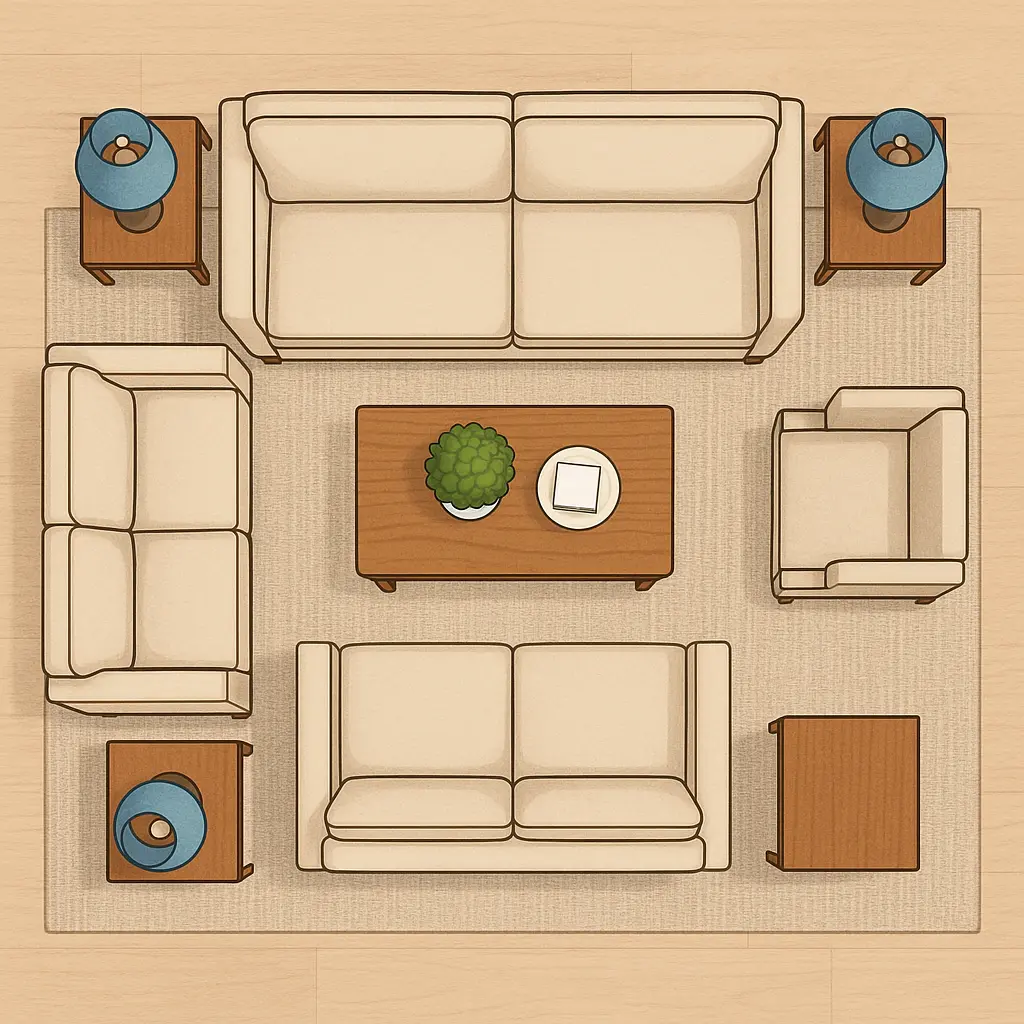
Best for larger spaces, this layout places every leg of your furniture on the rug, creating a luxurious, cohesive feel. Use 9’x12’ or larger rugs for this approach.
2. Front Legs On, Back Legs Off
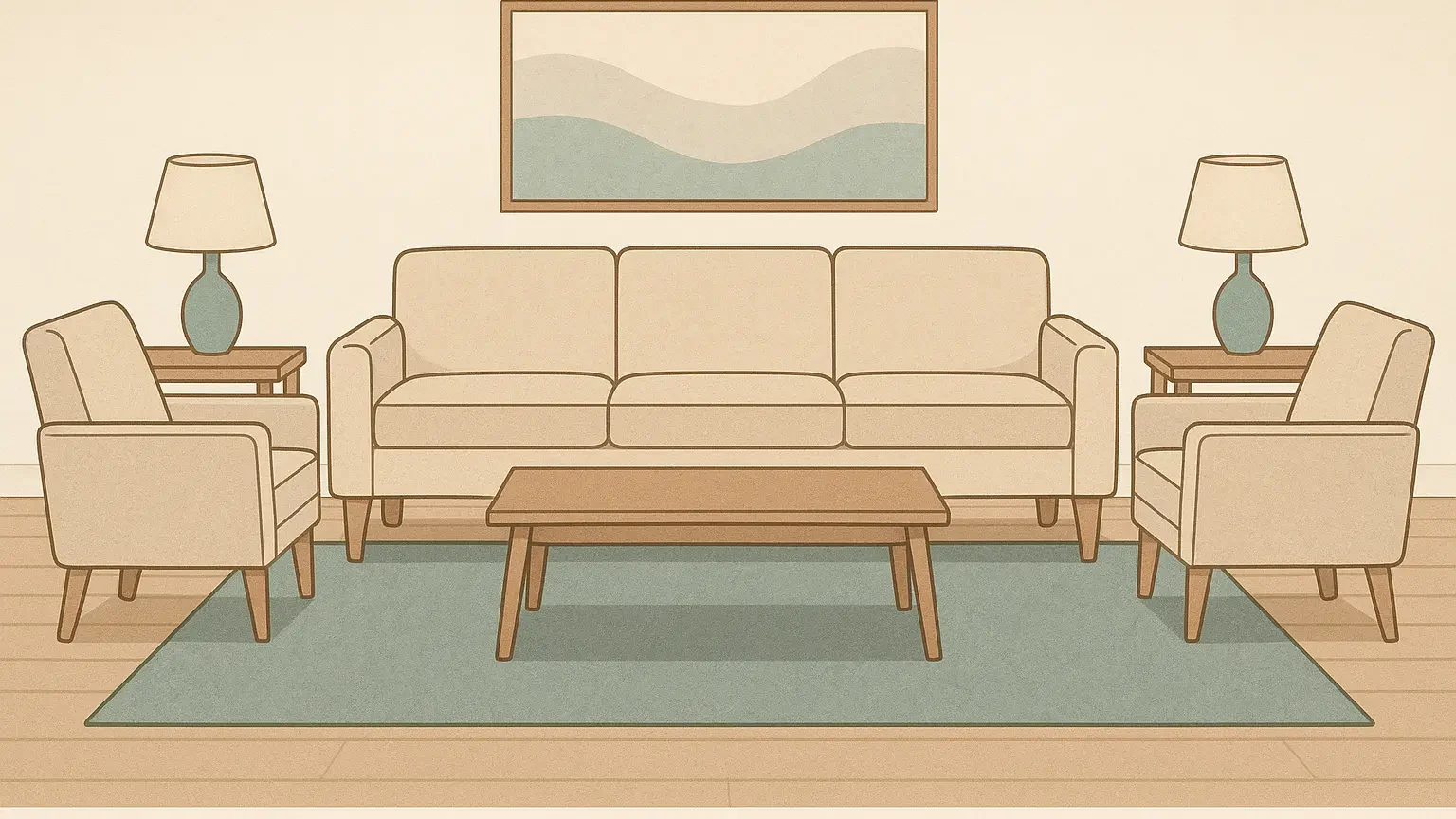
Ideal for medium-sized rooms or furniture placed against a wall. This method supports visual balance without requiring an oversized rug. A classic use for 8’x10’ rugs.
3. Floating Rug Under Coffee Table
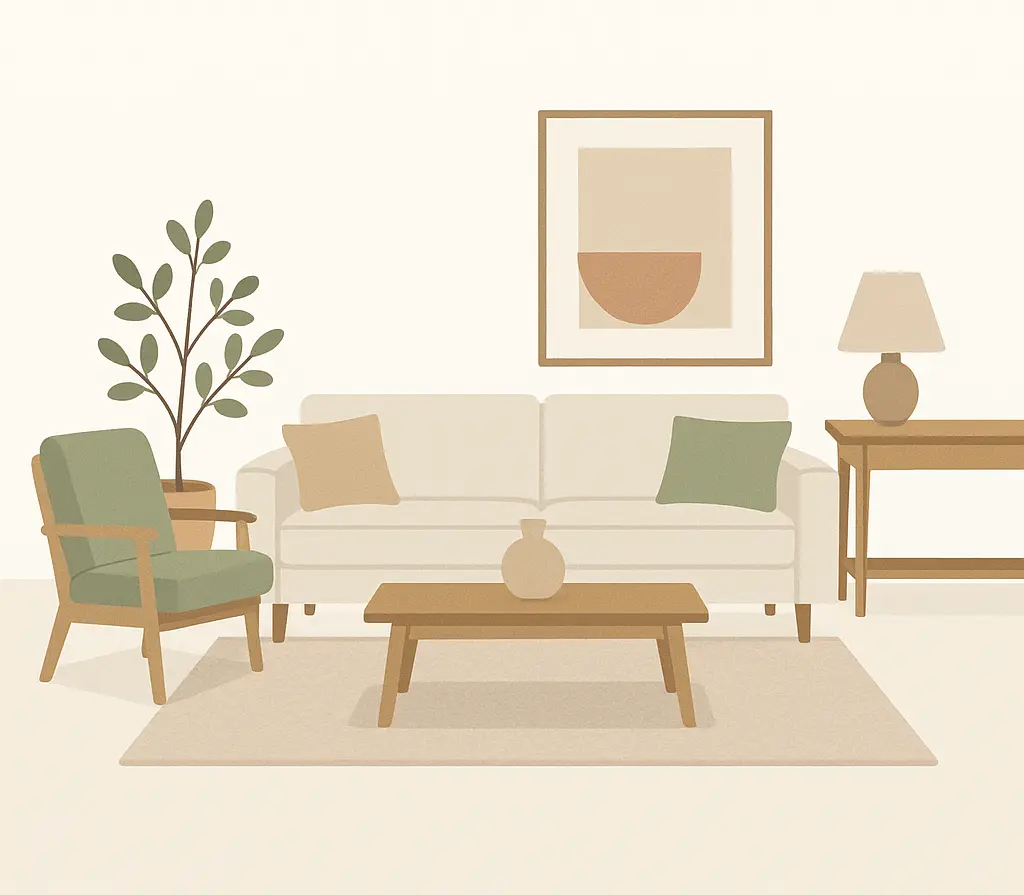
Used mainly in smaller rooms or budget layouts. Rugs “float” under a coffee table, but this should be used cautiously—it can make the space appear disconnected.
Measuring Your Living Room for the Right Rug
To avoid sizing mistakes and ensure the perfect fit, it’s important to measure accurately before purchasing. The key steps are discussed below.
Steps to Take Accurate Measurements
- Measure the length and width of your seating area, not the entire room.
- Decide whether you want furniture fully on, partially on, or off the rug.
- Leave at least 6–18 inches between rug edges and walls.
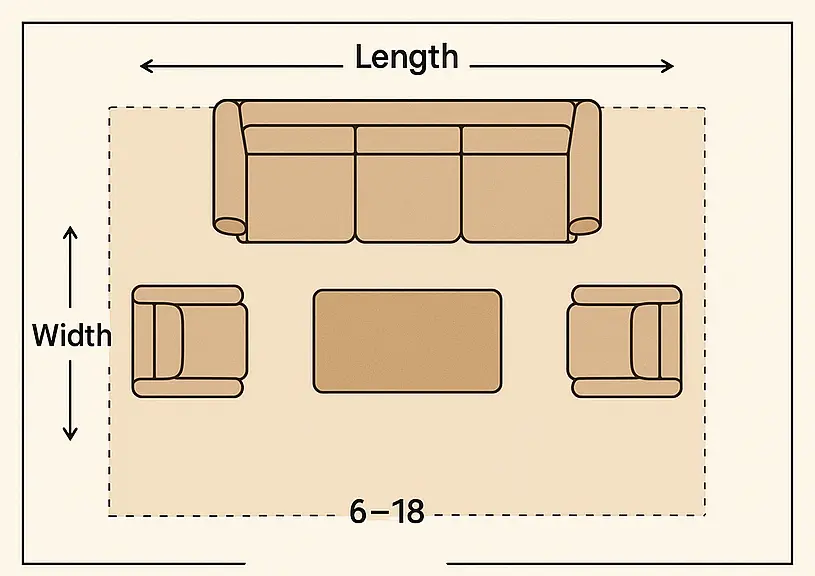
How to Map Out Rug Size with Tape Before Buying
Use blue painter’s tape to outline potential rug sizes on your floor:
- Mark corners or full borders of the rug.
- Move furniture accordingly to test visual alignment and flow.
- Step back to see if the rug placement feels balanced and intentional.
Rug Placement in Living Rooms
When it comes to rug placement in living rooms, consistency is everything. Follow these essential rules:
- Be Consistent with Furniture Legs: If the sofa’s legs are on, chair legs should be too.
- Orient the Rug with the Room: Align long edges with the room’s shape—not just the furniture.
- Leave Breathing Room: Maintain at least 6–12 inches of space between rug edges and the walls.
- Consider Traffic Flow: Leave 30–36 inches between large pieces for walkways (18–24 inches minimum if space is tight).
Visual Rug Placement Example

Rug Size Tips by Room Type
While this guide focuses on living rooms, rug size matters in other rooms too. Here’s a quick breakdown:
Bedroom Rug Sizes
- Queen Bed: 8’x10’ rug extending 18–24 inches beyond bed edges.
- King Bed: 9’x12’ for full coverage.
- Smaller rooms? Use runners on each side of the bed.
Dining Room Rug Sizes
- Add 36 inches from table edge to rug edge for chair movement.
- Best picks: 8’x10’ or 9’x12’.
- Flatweave rugs make chair movement smoother.
Hallways and Entryways
- Use runners that leave 2–5 inches between rug edge and wall.
- Center the runner and ensure door clearance with low pile options.
How to Choose a Rug for Living Room Based on Your Lifestyle
Before buying, ask yourself:
- Do I have pets or kids? Opt for stain-resistant, flatweave rugs.
- Do I need warmth? Try high-pile wool rugs to retain heat.
- Do I rearrange often? Lightweight rugs with rug pads are easier to manage.
Performance tip: Use rug pads to prevent slipping and protect your floors.
Rug Shape Considerations
Choosing the right rug shape is just as important as selecting the right size. The details are given below to help you make the best choice for your space.
Rectangular vs. Square vs. Round Rugs
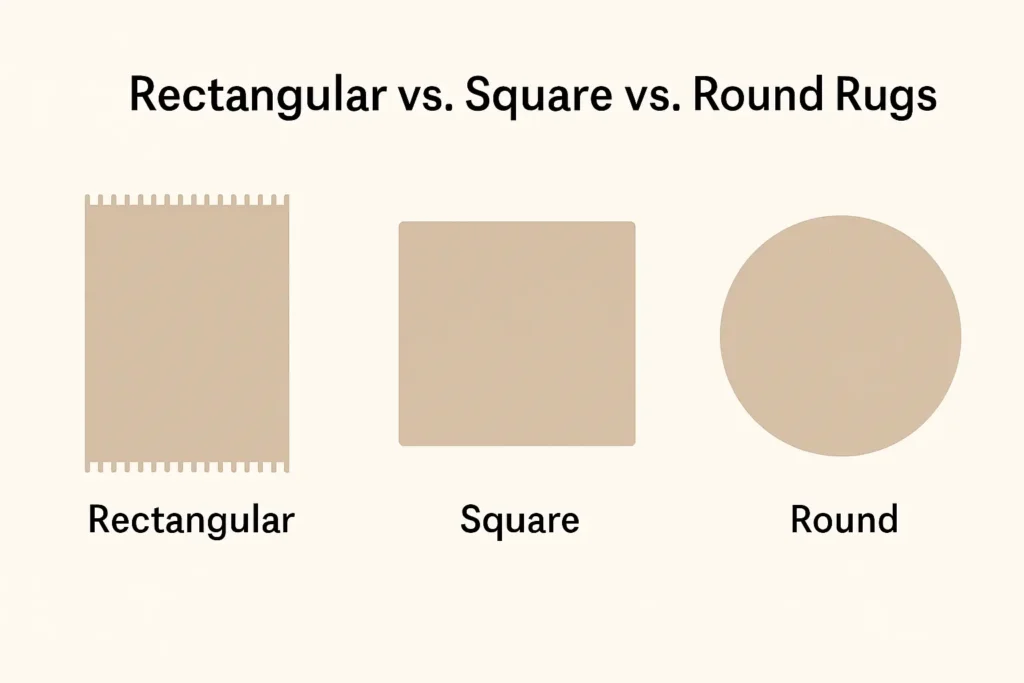
- Rectangular rugs are the most common and fit traditional furniture arrangements.
- Square rugs work well in symmetrical rooms or square living spaces.
- Round rugs add visual softness and are ideal for small nooks or under round coffee tables.
When to Use Each Shape for Better Visual Balance
- Use rectangular rugs for long or open-plan rooms.
- Place round rugs in smaller, enclosed seating areas to break up hard angles.
- Match rug shape to the shape of your furniture layout for visual harmony.
Rug Placement Tips and Tricks
Proper rug placement can elevate your living room’s overall look and functionality. The tips and tricks below will help you achieve a balanced and stylish setup.
Keeping Rugs Centered and Balanced
Ensure your rug is centered beneath the main furniture layout, especially your coffee table and sofa. Misaligned rugs can throw off the entire room.
Layering Rugs for a Stylish Look
Layer a smaller decorative rug over a neutral jute or sisal base. This is especially useful if your favorite rug is too small.
Using Rug Pads for Safety and Comfort
A rug pad prevents slipping, adds cushion, and extends your rug’s life. It’s essential on hardwood, tile, or laminate flooring.
Common Mistakes to Avoid
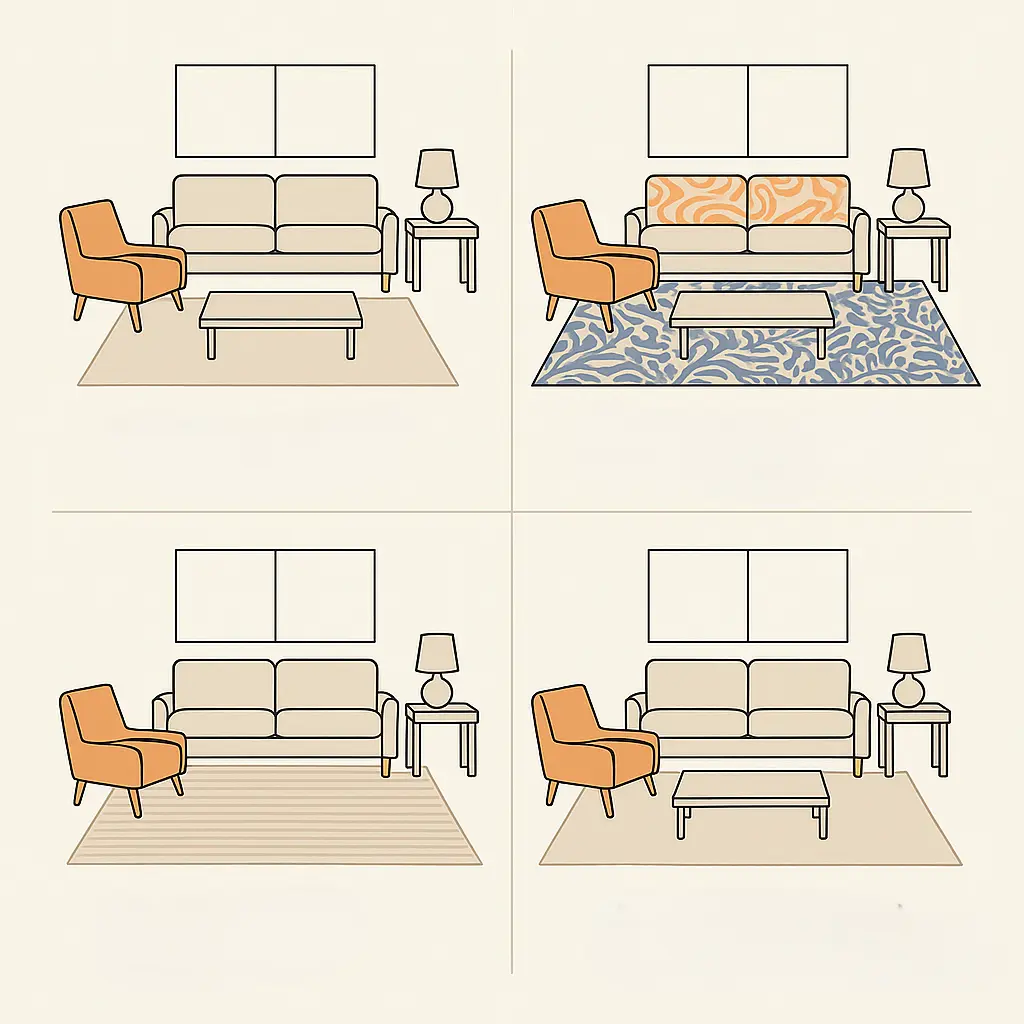
Avoiding a few key missteps can make a big difference in how your living room feels. Below are common rug placement and sizing mistakes to watch out for.
Rug Too Small for the Room
The most frequent error. A small rug can make your living room feel cramped and disjointed.
Clashing Patterns or Colors
Ensure your rug design complements your furniture and wall decor. Too many patterns can overwhelm the space.
Ignoring Traffic Flow and Furniture Arrangement
Leave clear walking paths around the rug. Don’t place rugs in high-traffic zones where corners may curl or lift.
Pro Tip: Use painter’s tape to map the rug size on your floor before buying. This helps you visualize the real footprint of your chosen rug dimensions.
FAQs About Rug Size For Living Room
1. What size rug should I get for a 12×18 living room?
An 8’x10’ or 9’x12’ rug works well, depending on furniture layout and how much floor you want exposed.
2. How to position a rug in the living room with a corner sofa?
Ensure the rug runs past the outer edge of the sofa legs. A 9’x12’ usually covers corner setups well.
3. Can I use a 5×8 rug in the living room?
Only in very small rooms or under coffee tables. Avoid it for larger layouts as it can make the room feel disjointed.
4. What rug size works best under a coffee table only?
A 5×8 or 4×6 rug may work if placed symmetrically. Consider layering to enhance size perception.
5. Is it okay to layer rugs in the living room?
Absolutely. Use a larger neutral base rug (like jute) and top it with a patterned or smaller rug for depth and warmth.
Final Thoughts: How Big Should a Rug Be in a Living Room?
There’s no one-size-fits-all solution—but understanding rug measurements, traffic flow, and furniture layout helps you select the perfect rug size for your living room. Use this rug size guide as a blueprint, and your rug will feel like a natural part of the space—not an afterthought.
Disclaimer
Content on Home Trending Tips is for informational purposes only. Please consult professionals before making home or garden decisions.